Ultrasonic blind cleaning can reach dust, grime, and residue that regular dusting may leave behind. Blinds may look clean at first glance, yet buildup can remain around cords, ladders, edges, and narrow spaces between moving parts. Over time, that hidden dirt can make window coverings look dull and harder to maintain.
For homeowners and businesses, the challenge is simple: blinds have many small areas that are difficult to clean by hand. A deeper cleaning method can help reach those spots without relying on heavy scrubbing. Understanding how ultrasonic cleaning works can make it easier to decide when your blinds need more than routine dusting.
Why Blinds Collect Hidden Dirt
Blinds are designed with slats, cords, ladders, edges, and moving parts that create many places for dust to settle. A duster may remove the visible layer from the front of each slat, but it often cannot reach the narrow spaces where grime builds up. Dust can also gather near hardware, along edges, and where parts overlap.
The type of buildup often depends on the room and how it is used. Open windows can bring in outdoor dust, while pets may add hair and dander. Kitchen blinds can collect residue from cooking, and blinds near vents may gather dust more quickly because of constant airflow.
Common buildup may include:
- Household dust
- Dirt and debris
- Pet hair and dander
- Indoor allergens
- Smoke residue
- Greasy or sticky grime
- Dust around cords and small parts
Even with regular cleaning, some of these areas remain difficult to reach. That is where a deeper blind cleaning method can be useful.
How Ultrasonic Blind Cleaning Works
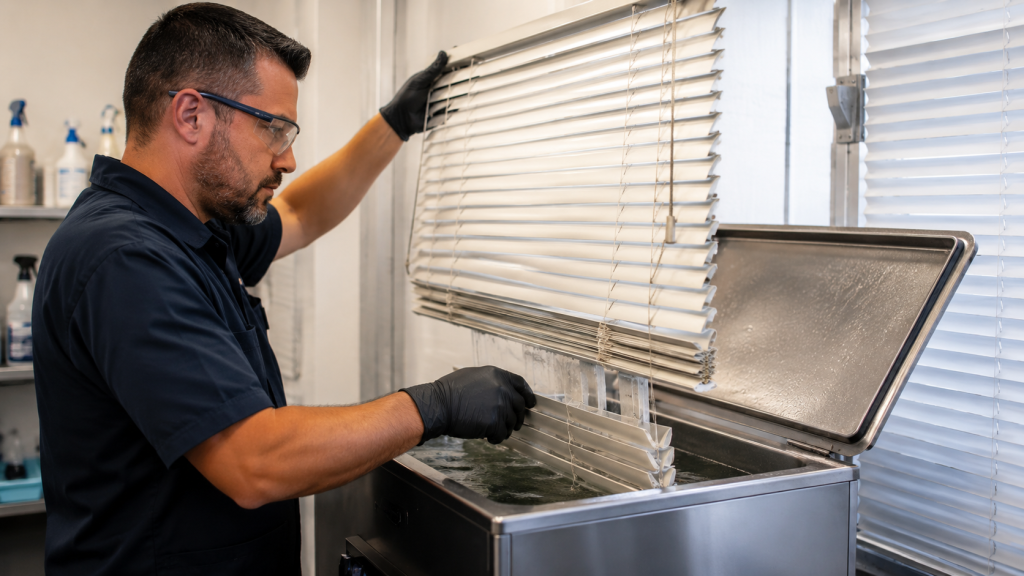
Ultrasonic cleaning works differently from wiping a blind with a cloth or brush. The blind is placed into a cleaning solution where ultrasonic action helps loosen buildup from its surface and detailed parts. Instead of depending only on direct contact, the process reaches into small areas that can be difficult to clean by hand.
Sound waves move through the liquid and create very small bubbles. These bubbles form and collapse quickly against the blind’s surfaces. That action helps loosen dust and grime from slats, cords, ladders, edges, and other narrow areas.
The process is often compared to a large ultrasonic cleaner used for small, detailed items. The main advantage is reach. The cleaning action can move around many parts of the blind at the same time, giving areas that are often missed during normal dusting more attention.
What Makes Ultrasonic Cleaning Different?
Regular dusting is useful for routine care, but it depends on a cloth, brush, or duster touching the dirt. That works well for open surfaces, but blinds contain many areas where direct contact is difficult. Cleaning every edge, cord, and narrow opening by hand can take a long time and may still leave residue behind.
Ultrasonic blind cleaning takes a different approach, using a cleaning solution and ultrasonic action to loosen buildup throughout the window covering. This can provide a more complete clean when standard dusting no longer produces the result you want.
Routine care still matters between professional cleanings. If you want more practical information about caring for blinds, shades, and other window coverings, dive into our blog for additional tips and helpful guidance.
What Can Ultrasonic Blind Cleaning Remove?
Window coverings are exposed to everyday activity, airflow, dust, and indoor residue. Because of this, the buildup on blinds is not always limited to loose surface dust. Over time, grime can settle around cords and slats, while pet dander and other particles can become trapped in detailed areas.
Ultrasonic cleaning can help remove dust, dirt, allergens, grime, smoke residue, and other buildup from hard-to-reach parts of the blind. The final result can depend on the blind’s material, age, condition, and the type of residue involved. A professional review is important because not every window covering should be treated in the same way.
Why Hidden Dirt Is Hard to Remove by Hand
Cleaning blinds by hand often looks easier than it is. Wiping the front of a slat may take only a few seconds, but a full blind may contain dozens of slats along with cords, ladders, edges, and controls. Cleaning several blinds can quickly become a long and tiring project.
There is also a risk of being too rough. Pulling on cords, bending slats, or scrubbing delicate areas can place extra stress on the window covering. Professional cleaning focuses on both removing buildup and handling the blind in a way that fits its design and condition.
Benefits of Ultrasonic Blind Cleaning
One of the main benefits of ultrasonic cleaning is its ability to reach detailed areas more effectively than basic surface dusting. That deeper level of care can help blinds look cleaner overall while reducing the amount of difficult hand-cleaning required.
A More Complete Clean
Dust around cords, edges, and narrow spaces can make blinds look dull even after the main surfaces are wiped. Ultrasonic cleaning helps address those detailed areas so the entire window covering can look more refreshed.
Less Need for Heavy Scrubbing
The ultrasonic process helps loosen buildup through the cleaning action rather than relying on forceful scrubbing. This can be useful for blinds with many small or delicate parts.
Easier Care for Multiple Blinds
Cleaning one blind by hand may be manageable, but several rooms or a commercial property can involve many window coverings. Professional service can make the process much easier for homeowners, offices, businesses, and property managers.
If your blinds or shades need more than one type of care, view our services to learn about blind cleaning, mobile blind cleaning, shade cleaning, and blind repair options.
When Should You Consider Deeper Blind Cleaning?
Light surface dust can often be managed with routine cleaning. However, there are times when blinds may need more detailed attention. If dust returns quickly, grime remains around cords and edges, or the slats still look dull after regular cleaning, a deeper service may be worth considering.
Professional cleaning can also be helpful when several blinds need attention at once or when window coverings have gone a long time without detailed care. Blinds exposed to pets, smoke residue, cooking areas, open windows, or steady airflow may also collect buildup more quickly.

Ultrasonic Cleaning vs. Regular Dusting
Regular dusting and ultrasonic cleaning serve different purposes. Dusting works well for light surface buildup and ongoing maintenance. It helps keep blinds looking neat between deeper cleanings and is easy to include in routine home or office care.
Ultrasonic cleaning is better suited for buildup that has settled into detailed or difficult-to-reach areas. It can help when ordinary wiping no longer gives the blinds a truly clean appearance. Rather than replacing regular dusting, ultrasonic cleaning adds a deeper level of care when it is needed.
Why Professional Handling Matters
Blinds vary in material, size, design, age, and operating system. Some may be in excellent condition, while others may already have worn cords, damaged slats, or loose parts. A professional should review the window covering before cleaning so the right method can be selected.
Ultrasonic Blind Services Inc. has provided window covering care since 1989. Its trained technicians work with blinds and shades for homes and businesses, helping customers choose cleaning or repair options based on the condition of their window coverings.
Frequently Asked Questions
Does Ultrasonic Blind Cleaning Remove More Than Dust?
Yes. Ultrasonic cleaning can help loosen dirt, grime, allergens, smoke residue, and other buildup in addition to ordinary dust. The exact result depends on the type and condition of the blind.
Is Ultrasonic Cleaning Safe for Every Blind?
The process is gentle on many types of blinds and shades, but every window covering is different. A professional should review the material, condition, and construction before cleaning begins.
How Is It Different From Wiping Blinds?
Wiping mainly cleans the areas a cloth can reach. Ultrasonic action works through the cleaning solution, allowing it to reach narrow spaces around slats, cords, ladders, and other detailed parts.
Should Dirty Blinds Be Replaced Instead?
Not always. If the blinds still work well and are in good condition, professional cleaning may help refresh their appearance. Damaged or badly worn blinds may need repair or replacement instead.
Give Hidden Dirt Less Room to Stay
Routine dusting helps with everyday upkeep, but it may not reach every part of a blind. Ultrasonic blind cleaning goes deeper by loosening buildup from detailed areas that are difficult to clean by hand.
For homes and businesses in San Pedro, CA, Ultrasonic Blind Services Inc. provides professional ultrasonic blind cleaning and related window covering care. Contact the team to learn whether this deeper cleaning method is the right fit for your blinds.