Shade cleaning can feel tricky when dust settles into pleats, stains mark soft fabric, or a delicate covering starts to look dull. A quick wipe may seem harmless, but the wrong method can leave a mark or change the shape of the folds.
We help homeowners and businesses care for pleated shades and specialty window coverings. This guide explains how to plan routine care, avoid common mistakes, and recognize problems that need a closer look. Start with your shade’s care instructions, then choose the gentlest approved method for the job.
Check Your Shade Type Before Cleaning
Two shades can look alike and still need different care. Pleated shades have folded fabric, while cellular shades have hollow pockets. Sheer styles may combine several layers, and Roman shades gather into larger folds.
Find the brand, product name, and fabric information before you begin. Check your paperwork or ask the seller for the matching care guide. A general cleaning tip should never replace instructions for your exact shade.
Graber lists dusting and vacuuming for pleated shades, but does not list spot cleaning or water immersion for that product line. Its cellular shade guidance allows other methods. That difference makes product identification worth the effort.
Check these details first:
- Shade style and fabric name
- Approved cleaning tools and methods
- Restrictions for liners or special finishes
- Existing tears, loose seams, or misshapen folds
- Any care limits for covered rails or motorized parts
Keep Routine Shade Cleaning Gentle
Routine care is easier to manage before dust becomes heavy buildup. Choose a time when you can see the entire surface clearly. Look across the shade in daylight to find dusty folds and areas that need attention.
Use a clean, soft duster with light contact on shades approved for dusting. Follow the care guide’s instructions for positioning the shade. Avoid pressing into folds or tugging the material to reach a narrow space.
Vacuum only where permitted, using the recommended attachment and gentle pressure. Stop if the fabric pulls toward the nozzle. Brush attachments are unsuitable for some specialty products, including Luminette Privacy Sheers, so check before using one.
Keep routine care simple:
- Inspect the surface before starting.
- Use clean tools reserved for delicate surfaces.
- Work slowly in small sections.
- Stop if the fabric shifts or catches.
- Leave stubborn buildup for a professional review.
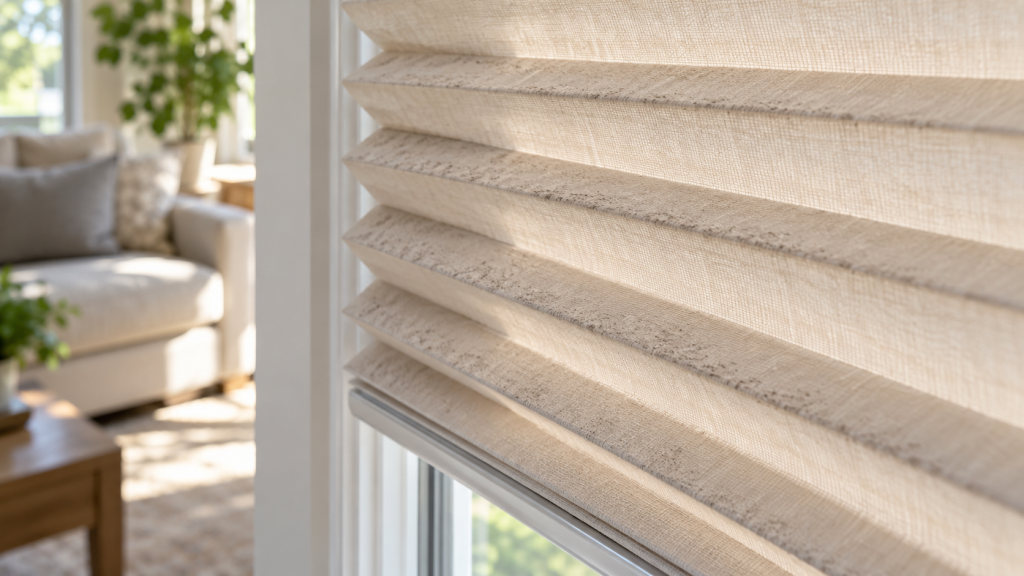
Handle Spots Only With an Approved Method
A fingerprint or small splash can be tempting to scrub. Before treating it, confirm that your exact fabric allows spot cleaning. Some specialty shades prohibit this method, even though similar products permit it.
Hunter Douglas recommends a soft cloth or sponge, lukewarm water, and gentle blotting on approved Roman shade fabrics. Mild detergent may be allowed, but rubbing can damage the fabric. Spot cleaning may also leave a visibly cleaner patch. Follow the product’s exclusions and drying instructions.
Do not turn one small spot into a larger cleaning project. Stop if the color changes, the mark spreads, or the surface begins to crease. Tell the cleaner what caused the stain and which products you already tried. Those details help us understand the problem before choosing the next step.
Avoid Common Specialty Shade Cleaning Mistakes
The quickest method is not always suitable for soft window coverings. Keep these common mistakes in mind before reaching for household cleaning supplies:
- Copying another product’s instructions: Match the care guide to your exact shade and fabric.
- Rubbing a stain: Approved spot cleaning generally calls for gentle blotting.
- Using hot air: Use a cool setting only where the manufacturer permits air cleaning.
- Pushing tools inside layers: Do not insert objects between sheer fabrics or into delicate cells.
- Assuming every fabric can get wet: Some products prohibit spot cleaning or other wet methods.
Window cleaning deserves care, too. Hunter Douglas advises spraying glass cleaner onto a cloth instead of directly onto the glass to prevent splashes on shade fabric. Keep the treated cloth clear of the covering as you clean around it.
Know When Professional Care Makes Sense
Home maintenance has limits. If approved dusting no longer improves the appearance, arrange an inspection rather than trying stronger cleaners. Professional shade cleaning starts with understanding the material and the buildup involved.
Ask for help with concerns such as:
- Dirt that remains after routine care
- Stains with an unknown cause
- Residue spread across several folds
- Delicate coverings with unclear care instructions
- Large or hard-to-reach shades
- Fabric damage or uneven movement noticed during cleaning
At Ultrasonic Blind Services Inc., we clean shades for homes, offices, and commercial spaces in San Pedro, CA. Our service begins with a review of the shade type and condition, followed by care suited to the covering.
View our services to learn about cleaning support for pleated shades and specialty materials. Share the brand, fabric details, and clear photos when asking about service.
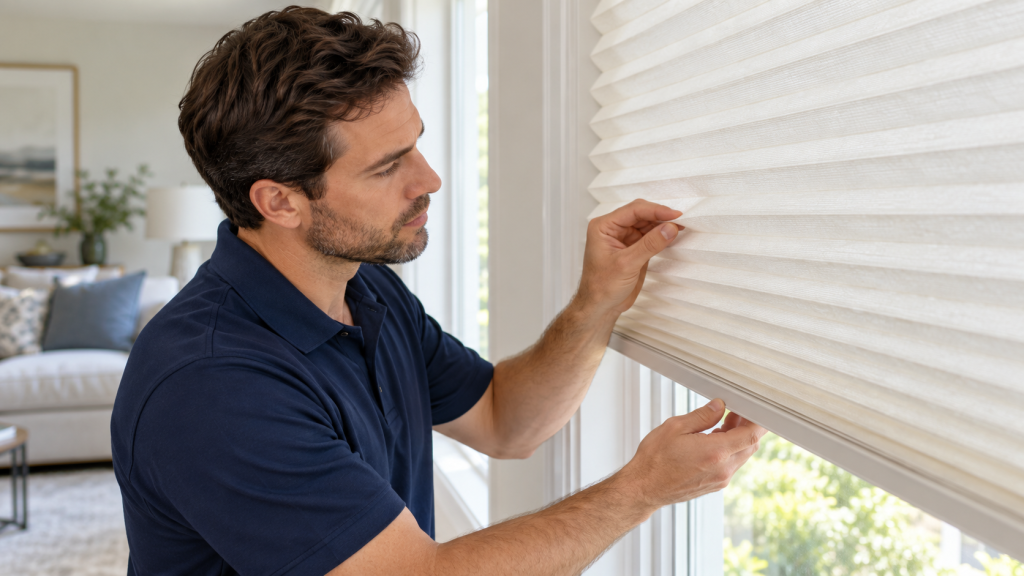
Ask About the Right Professional Cleaning Method
A professional method must match the product. Ultrasonic cleaning is an option for certain shades, but it should not be assumed suitable for every specialty fabric.
Hunter Douglas’s Duette guide excludes room-darkening fabrics and several other fabrics from ultrasonic cleaning. It also directs cleaners to keep the headrail out of the solution. These restrictions show why the exact product guide matters.
Before booking, ask which method is suitable, what results are realistic, and how they’ll handle the covering. Cleaning cannot promise to reverse fading, repair tears, or remove every stain. We can review visible wear and recommend further care when needed.
Build a Simple Shade Care Routine
Add a shade check to your regular room cleaning. Notice changes early, keep product information handy, and use only the maintenance methods approved for your coverings.
A short record can help you track recurring concerns. Note where marks appear, when you first noticed them, and any cleaning already attempted. This is useful when several matching shades need service. Keep the original care guide with those notes so anyone helping with maintenance can follow the same approved cleaning instructions.
Explore our blog for more window covering maintenance topics. Regular attention helps you better gauge when light upkeep is enough and when to seek help.
Frequently Asked Questions About Shade Cleaning
Can I wash pleated shades in a bathtub?
Do not assume they are washable. Graber’s pleated shade guidance lists dusting and vacuuming, without water immersion. Check your exact manufacturer’s instructions before applying water.
How often should I check my shades for dust?
Check them during regular room cleaning. Let visible buildup and the product’s maintenance guidance shape your routine, rather than following one schedule for every room.
Can cleaning fix a faded shade?
Cleaning removes suitable dirt and residue; it does not restore color lost through fading. Have the shade assessed to distinguish buildup from permanent changes in appearance.
Should I mention uneven movement before cleaning?
Yes. Tell us about sticking, crooked hanging, or loose parts. Those concerns may need a separate repair review, and they help us plan proper handling.
Give Your Specialty Shades the Care They Need
Effective shade cleaning starts with the right product instructions, a gentle routine, and knowing when to stop. Avoid guesswork with stains and specialty fabrics.
Ultrasonic Blind Services Inc. can review your window coverings and discuss suitable care. Contact us to request shade cleaning and take the next step toward cleaner, well-maintained shades.